Last Updated: October 26, 2026
Quick Summary
Effective PPP project execution follows a fixed discipline of preparation, allocation, and monitoring, in that order. Strong preparation means feasibility studies built as one integrated model and stage gates that stop weak projects from advancing. Risk must be allocated before it is mitigated, with each risk assigned to the party best able to manage it.
- Most public-private partnerships fail in the eighteen months after signing, not at signing.
- Environmental and social assessment should be finished before structuring because findings change scope.
- Risk belongs with the party best able to manage it, and allocation comes before mitigation.
- Mobilization is the most under-managed phase, so agree a joint transition plan within the first month of award.
- An indicator with no consequence attached is decoration, not performance management.
Table of Contents
- Why PPP Project Execution Fails After Financial Close
- PPP Project Preparation Best Practices Before You Sign
- PPP Risk Management: Allocate Before You Mitigate
- Structuring the Deal for Bankability
- PPP Contract Management From Award to Operations
- Public-Private Partnership Examples: What Separates Closures From Collapses
- KPIs and Monitoring That Catch Problems Early
- Preparing Your Program for Advisory Review
- Frequently Asked Questions
Why PPP Project Execution Fails After Financial Close
Most public-private partnerships do not fail at signing. They fail in the eighteen months after it.
The pattern repeats across markets. A deal reaches financial close, then mobilization stalls. Design changes arrive late. The public counterparty and sponsor discover they read the same contract differently.
The root cause is rarely one bad clause. PPP project execution gets treated as an administrative phase rather than a second, harder transaction.
Bankability is not a status you achieve at close. It is something you maintain, month by month, through construction and operations.
Execution is a discipline of preparation, allocation, and monitoring, in that order. Get the order wrong and no amount of contract drafting saves you.
PPP Project Preparation Best Practices Before You Sign
Preparation is where PPP project preparation best practices earn their name. Work done before award determines how much of the contract you will renegotiate later. Strong preparation has two layers: the studies, and the gates that stop a weak project from advancing.
Feasibility Work That Holds Up Under Scrutiny
A feasibility study is only useful if it survives a lender’s due diligence. Most do not, because they answer the wrong questions.
Technical, financial, and economic assessments must be built as one model, not three documents stapled together. If the technical design assumes capacity the demand forecast cannot support, the financial model is fiction. If the economic case rests on benefits the tariff cannot capture, the fiscal commitment is unfunded.
Three tests separate strong feasibility work from paperwork:
- Demand tested against downside cases, not a single central forecast
- Costs benchmarked against comparable delivered projects, not vendor estimates
- Environmental and social assessment finished before structuring, because findings change scope
Sequencing is what most guides miss. Environmental and social findings routinely arrive after pricing, triggering foreseeable variations. Finish them early or budget for the change.
Stage Gates: The Checklist Most Teams Skip
Stage gates are formal checkpoints where a project must prove readiness before advancing. They are the cheapest risk control available, and the one most often skipped under political pressure to announce a pipeline.
Use this gate structure as a practical execution checklist:
| Gate | Question It Answers | Evidence Required | Who Signs Off |
|---|---|---|---|
| Gate 1: Strategic fit | Does this project serve the national plan? | Needs case, priority ranking | Sponsoring ministry |
| Gate 2: Feasibility | Can it be built and paid for? | Technical, financial, economic studies | Technical and finance leads |
| Gate 3: Structuring | Is the risk transfer credible? | Allocation matrix, draft contract terms | Legal and treasury |
| Gate 4: Market test | Will the private sector bid? | Market soundings, indicative interest | Procurement lead |
| Gate 5: Award readiness | Is the contract executable? | Final term sheet, funding confirmations | Approving authority |
| Gate 6: Mobilization | Is the delivery team in place? | Mobilization plan, baseline schedule | Project director |
A project that cannot clear a gate should stop there. Announcing a pipeline you cannot deliver damages investor credibility far more than a smaller, credible one.
PPP Risk Management: Allocate Before You Mitigate
PPP risk management works in a fixed order: identify, allocate, then mitigate.
Identify risks across the full life cycle, not just construction. The risks that kill partnerships usually sit in operations, demand, currency, and political transition.
Then allocate by one rule: risk belongs with the party best able to manage it.
| Risk | Typical allocation | Why |
|---|---|---|
| Design and construction cost/schedule | Private (EPC contractor) | Contractor controls means and methods |
| Commissioning and interface risk | Shared, with clear interface agreements | Neither party controls all interfaces alone |
| Demand and revenue risk | Depends on whether public sector controls drivers (e.g., toll-setting, competing infrastructure) | Private cannot hedge what government controls |
| Regulatory and change-in-law | Public | No private party can hedge sovereign acts |
| Currency and transfer | Shared; public may provide partial guarantees | Private can hedge some, not convertibility |
| Force majeure and climate events | Shared, defined by insurability | Insurance market sets the boundary |
| Handback condition | Private, with defined standards | Operator controls maintenance |
Only after allocation does mitigation make sense.
Sector differences matter more than most guides admit.
For sovereign programs, the risk conversation quickly becomes a governance conversation. Our guide on mitigating sovereign infrastructure risk walks through the practical steps for that layer.
A risk allocated to a party that cannot price it will be priced anyway, as a premium, a contingency, or a future renegotiation claim. Ambiguous allocation is not neutral; it is expensive.
Structuring the Deal for Bankability
Bankability lets a project attract private capital on terms the public sector can afford.
Financial structuring translates those into terms. Debt sizing, tenor, and coverage ratios depend on how stable cash flows look through a downside case.
The contract structure carries most of the weight. Lenders read termination provisions, change-in-law clauses, and dispute mechanisms before projections.
Sustainable procurement matters here too. A process that selects on lowest price rather than delivered value for money tends to produce bidders who win on optimism and return for relief later.
For a deeper treatment of the financing side, see our strategic guide on securing financing for large-scale development.
PPP Contract Management From Award to Operations
PPP contract management is the discipline of running the contract as a living instrument. The award is the starting point, not the finish line.
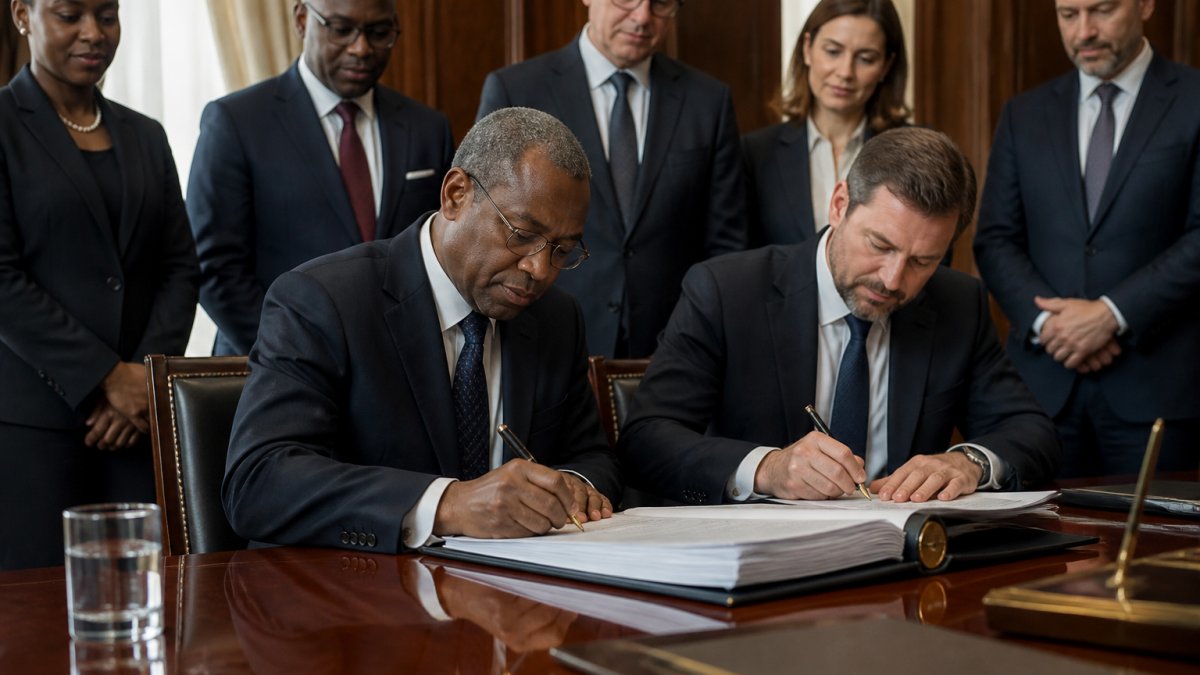
Mobilization is the most under-managed phase in the life cycle. Between award and full construction, the sponsor must mobilize financing, finalize design, appoint the delivery team, and set up reporting.
A few practices separate well-run contracts from troubled ones:
- A joint transition plan agreed within the first month of award
- A single point of contact on each side with authority to resolve issues
- A standing contract management team on the public side, not a part-time role
- A shared data room so both parties work from the same baseline
Contract management also means managing renegotiation. Some is legitimate, driven by genuine change in circumstances. Much is avoidable, caused by ambiguity that should have been resolved before signature.
Dispute management belongs in the same conversation. Escalation ladders that are never used are worse than none, because they create delay without resolution.
Public-Private Partnership Examples: What Separates Closures From Collapses
Public-private partnership examples are usually told as success stories or cautionary tales. The more useful reading is structural: what did the well-executed ones do differently in year one?
Three patterns show up repeatedly.
Well-executed partnerships front-load the boring work. Feasibility, environmental assessment, and risk allocation are finished before the market is approached.
Troubled partnerships treat financial close as the finish. Mobilization drifts, design changes arrive late, and the public counterparty has no contract management capacity.
A useful insider observation: the projects that close cleanly tend to have a government team that can read the financial model. Institutional capacity on the public side is not a soft factor.
KPIs and Monitoring That Catch Problems Early
Performance monitoring is only valuable if it changes decisions. Most PPP reporting fails that test: it measures activity rather than outcomes, and data arrives too late to act on. A practical system has four components: a small set of contract-linked indicators, a fixed review cadence, a data governance protocol, and a clear link to consequences.
The Execution Dashboard
A monitoring dashboard should track a small set of indicators that map to the execution risks you allocated. The table below is a starting structure; the specific thresholds belong in the contract.
| Dimension | Example indicator | Typical cadence | Consequence trigger |
|---|---|---|---|
| Schedule | Milestone variance against baseline | Monthly | Cure notice, liquidated damages |
| Cost | Earned value / cost variance | Monthly | Reporting escalation, lender covenant |
| Service quality | Availability, response time, complaint resolution | Monthly or quarterly | Payment deduction |
| Risk | Open risk register items by severity | Quarterly | Escalation to steering committee |
| Contract performance | Dispute count, variation orders, unresolved claims | Quarterly | Renegotiation review |
| Safety and environment | Incident rates, environmental exceedances | Monthly | Stop-work or remediation |
Performance management works when indicators are defined in the contract so both parties agree what “good” looks like, reported on a fixed cadence with the same definitions, and tied to consequences such as payment deductions or escalation triggers. An indicator with no consequence is decoration.
Data Governance Before Software
Digital tools help, but data governance matters more. A dashboard fed by inconsistent data is worse than a simple report with clean inputs. Before buying a platform, agree four things: who owns each data field, how often it is updated, the single source of truth for each metric, and how data disputes are resolved. Most failed dashboards fail on these questions, not the software.
A shared data environment, a common project data room with defined access rights, reduces the reconciliation work that consumes contract management teams. Both parties should be able to open the same schedule, cost report, and risk register and see the same numbers.
Contingency Planning and Resilience
Contingency planning belongs in the same system. Resilience against inflation, supply-chain disruption, political change, and climate events is now a core execution risk. A dashboard that cannot show a stressed scenario only tells you what already happened. Scenario-test the financial model against defined shocks, pre-agree relief events and their evidence requirements, and maintain a contingency plan naming who decides and how quickly.
The test of a monitoring system is not whether it produces reports. It is whether a problem shows up early enough, and with enough authority behind it, to change a decision.
Preparing Your Program for Advisory Review
Advisory review tests a program’s preparation against people who have seen the failure modes before.
Before commissioning advisory support, do three things. First, assemble project documentation into a single, consistent data set: feasibility studies, risk matrix, draft contract, and financial model. Inconsistencies are the first thing a reviewer finds.
Second, define what you want the review to decide.
Third, be clear on scope and cost structure before you engage.
For the capital-raising side of the same question, our guide on attracting private capital to public projects covers how investors read a pipeline.
The hard truth about PPP project execution is that the weakest link is almost always public-side institutional capacity.
At Russell Duke, we work with governments, institutions, and sponsors to close that gap.
Get in touch with Russell Duke to turn your national development priorities into financeable, executable infrastructure programs.
Frequently Asked Questions
What are the key stages of a PPP project?
A PPP project moves through five stages: project preparation and feasibility work, structuring and procurement, contract negotiation and financial close, construction and mobilization, and long-term operations and performance monitoring. Each stage has its own decision points, and skipping or rushing the early ones is the most common reason projects stall later. Strong PPP project execution treats these stages as gates, not formalities, with clear evidence required before the next stage begins.
How can governments prepare a PPP project for successful execution?
Preparation should answer three questions before procurement: is the project technically sound, is it affordable for the public sector, and is it bankable for private capital? That means credible feasibility studies, a realistic risk allocation, and a legal framework that lenders can rely on. Involving transaction advisors early and running a formal stage-gate review before launch reduces the chance of a failed tender or a renegotiation shortly after award.
What causes PPP projects to be renegotiated?
Renegotiation usually traces back to weak preparation: optimistic demand forecasts, unclear risk allocation, incomplete environmental or social assessment, or contracts that did not anticipate changes in law or currency. Political turnover adds pressure when a new administration revisits commitments. Strong PPP contract management, including clear change procedures and regular performance reviews, keeps small issues from becoming formal renegotiations.
What makes a PPP project bankable?
Bankability comes from a combination of a credible revenue or availability mechanism, a risk allocation lenders accept, a legal and regulatory framework that supports enforcement, and a sponsor team with a track record. Lenders also look at governance: who approves changes, how disputes are resolved, and whether the public sector has the institutional capacity to manage the contract. PPP project execution that ignores these factors often reaches financial close late or not at all.
